
Service/Program
Critical Care Transport Connecticut Children’s Critical Care Transport Service include highly skilled nurses, respiratory therapists, and advanced practitioners and physicians with advanced training to care for critically ill infants, children, and teens. The Critical Care Transport Service provides: 24 Service/Program
Diabetes Program Diabetes is a medical condition that causes irregular blood sugar levels in the body. When blood sugar levels remain too high for too long, it can cause long-term health problems such as nerve damage, vision impairment, kidney damage, or heart disease. The pediatric Article
Q&A: Deep Brain Stimulation (DBS) for Pediatric Epilepsy & Primary Dystonia By David Hersh, MD: If your child’s epilepsy or dystonia isn’t responding to medication or other treatments, what comes next? Connecticut Children’s, in partnership with UConn Health, offers deep brain stimulation (DBS) as an option for pediatric patients — and for many families, a reason for hope
Service/Program
Center for Rare Bone Disorders Connecticut Children’s Center for Rare Bone Disorders specializes in treating and finding causes of rare bone diseases. The center is headed by globally recognized endocrinologist and researcher Emily Germain-Lee, MD, who is actively developing new therapies to treat these Service/Program
Kids’ Center for Bone Health The Kids’ Center for Bone Health provides comprehensive, multidisciplinary care to children of all ages who suffer from metabolic bone diseases, including primary and secondary causes of bone loss, such as: Effects of chronic illness Effects of medical therapies History of Suspected Neurosurgical Shunt Malfunction Clinical Pathway Ventriculoperitoneal (VP) shunt insertion remains the mainstay of treatment for hydrocephalus despite a high rate of complications. In the United States alone, more than 30,000 procedures to relieve hydrocephalus are performed every year. The 1-year failure rate for VP shunts had
Suspected Sexual Abuse Clinical Pathway According to the U.S. Department of Health and Human Services, in 2017, there were 674,000 substantiated cases of child maltreatment in the U.S., 8.6% of which were sexual abuse. In Connecticut, there were 8,442 victims of child maltreatment, and 401 of those cases involved
Article
Carpal Tunnel Syndrome in Kids: Symptoms, Causes, and When to See a Specialist By Sonia Chaudhry, MD, FAAOS: Sonia Chaudhry, MD, orthopedic surgeon, dives into what carpal tunnel syndrome (CTS) is, how it can affect kids, and when it’s time to see a pediatric orthopedic specialist.
Tethered Cord: Post-Operative Care Clinical Pathway Tethered cord occurs when the spinal cord is attached to tissues around the spine, most commonly at the base of the spine. The attached tissue limits the movement of the spinal cord within the spinal column and causes an abnormal stretching of the spinal cord and impairment of
Article
Caring for the Caregiver By Jacquelyn M. Rose, MPH: At Connecticut Children’s Childhood Prosperity Lab, we believe improving child, youth, and family health requires a comprehensive approach. Recently, I was reminded just how critical this approach is in our ongoing work. Childhood Prosperity Lab, a program of the Office for
Tonsillectomy and Adenoidectomy: Perioperative Care Clinical Pathway Tonsillectomy and adenoidectomy is a common procedure with greater than 500,000 performed annually in the United States. However, there is variability in peri-operative and post-operative care for these patients. This can lead to confusion and dissatisfaction for patients
Urinary Tract Infection Clinical Pathway Urinary tract infection (UTI) is one of the most common causes of SBI (serious bacterial infection) in children aged 2-24 months, and a common reason for inpatient admission. The goal of this pathway is early treatment to help with elimination of infection and prevention of
Article
Kids' Bones Are Different: The Importance of Pediatric Orthopedic Care By Donna M. Pacicca, MD: As kids grow, their bones, joints, and muscles go through many changes. Sometimes, parents wonder if their child’s growth patterns, pain, or injuries need special attention from a pediatric orthopedic specialist. Donna Pacicca, MD, pediatric orthopedic surgeon, discusses when it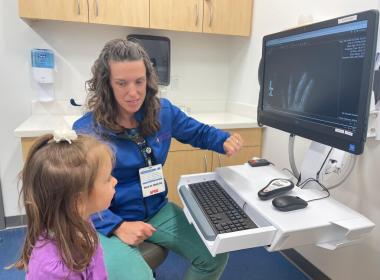
Article
10 Healthy Holiday Traditions to Start With Your Family Holidays go hand in hand with a big meal, several kinds of dessert, and an afternoon nap. We get it! No need to give up all your usual traditions – but how about sneaking some healthy ones into the mix? These ideas will keep your child entertained and engaged all day, and might
Specialty
Ear, Nose & Throat We take a team approach when treating ear, nose, and throat conditions, and offer specialized, compassionate care to help patients get better and live healthier. Our pediatric otolaryngologists (ENT specialists) and advanced practice providers have decades of experience